Wabi-Sabi Japanese Tea Room with Exposed Beams and Stone Floor
Hunan Lushan Yunkai Valley · Zhou Lu Min Su
Wabi-Sabi Japanese Tea Room with Exposed Beams and Stone Floor
japanese tea room · wood and stone · meditation space
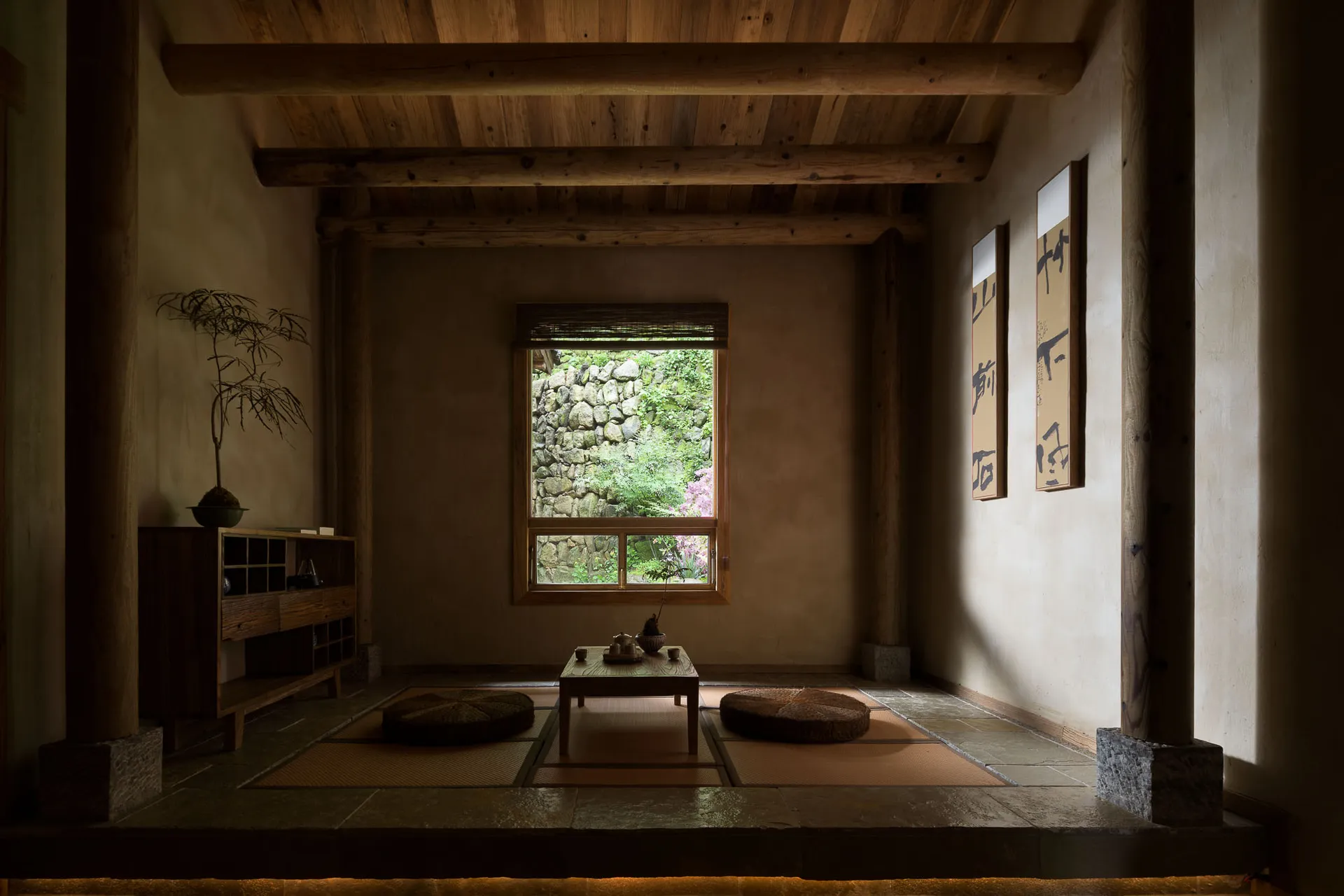
A serene traditional Japanese tearoom bathed in soft natural light from a garden-facing window.
Wabi-Sabi Japanese Tea Room with Exposed Beams and Stone Floor
japanese tea room · wood and stone · meditation space
A serene traditional Japanese tearoom bathed in soft natural light from a garden-facing window.
About this design
This tranquil Japanese tea room embodies the wabi-sabi aesthetic through its honest use of natural materials and appreciation of imperfection. The dominant palette consists of warm earthy tones—honey-colored cedar beams, neutral clay-plaster walls, and cool grey stone flooring that contrasts beautifully with the golden tatami mats. Massive exposed wooden beams run across the ceiling, creating a sense of grounded strength and historical depth. Natural light pours in from a large wooden-framed window revealing a lush green garden and stone wall outside, while two vertical calligraphy scrolls with bold ink brushwork adorn the right wall. The spatial layout is intentionally minimal, with a low wooden chabudai table centered between two round, woven zabuton cushions. A dark wood tansu-style cabinet on the left holds a minimalist ikebana arrangement of a single bare branch. The overall mood is deeply meditative, quiet, and connected to nature. This space perfectly suits practitioners of tea ceremony, meditation, mindfulness, or anyone seeking a peaceful sanctuary that honors simplicity and natural textures.
- Style
- japanese tea room
- Materials
- wood and stone
- Subject
- meditation space