Quick Answer: What Is the 2026 Tax Credit for Triple Pane Windows?
In 2026, homeowners can claim a federal tax credit of 30% of the cost of qualifying energy efficient triple pane windows, up to a maximum of $600 per year. This credit is part of the Energy Efficient Home Improvement Credit (Section 25C) established by the Inflation Reduction Act. To qualify, windows must meet ENERGY STAR Most Efficient criteria with a U-factor of 0.20 or below for most climate zones. The credit applies to both the product cost and professional installation, making triple pane windows significantly more affordable for homeowners seeking improved insulation and lower energy bills.
Key Takeaways
- 30% tax credit up to $600: Claim 30% of qualifying window costs, capped at $600 annually for windows and skylights combined
- ENERGY STAR Most Efficient required: Standard ENERGY STAR certification is not enough—windows must meet the "Most Efficient" designation
- U-factor requirements vary by zone: Northern zones require U-factor ≤0.20; Southern zones may qualify at ≤0.25
- Installation costs included: Both product and professional installation costs count toward the credit
- Annual credit resets each year: Unlike the old lifetime cap, you can claim up to $600 every tax year through 2032
- Must be primary residence: Rental properties and second homes do not qualify
- Keep documentation: Save the Manufacturer's Certification Statement and all receipts for IRS verification

Understanding the Energy Efficient Home Improvement Credit
The Inflation Reduction Act (IRA) of 2022 significantly expanded tax incentives for energy efficient home improvements, including windows. According to the U.S. Department of Energy, windows account for 25-30% of residential heating and cooling energy use, making them a prime target for efficiency upgrades.
How the Credit Works
The Energy Efficient Home Improvement Credit (IRC Section 25C) allows homeowners to claim:
- 30% of project costs for qualifying improvements
- $600 annual cap specifically for windows and skylights
- $1,200 total annual cap for most efficiency improvements combined
- Credit resets annually through December 31, 2032
Tax Credit vs. Tax Deduction
It's important to understand that this is a tax credit, not a deduction. A $600 tax credit reduces your tax bill by $600, dollar for dollar. A $600 deduction would only reduce your taxable income by $600, saving you roughly $120-$200 depending on your tax bracket.

2026 Eligibility Requirements for Triple Pane Window Tax Credit
Not all triple pane windows automatically qualify for the tax credit. The IRS and ENERGY STAR program have specific requirements that must be met.
Product Requirements
| Requirement | Specification | Notes |
|---|---|---|
| Certification Level | ENERGY STAR Most Efficient | Standard ENERGY STAR not sufficient |
| U-Factor (Northern Zone) | ≤0.20 | Climate zones 4-8 |
| U-Factor (Southern Zone) | ≤0.25 | Climate zones 1-3 |
| Solar Heat Gain (SHGC) | Varies by zone | ≤0.25 in hot climates |
| Manufacturer Certification | Required | Must provide written statement |
Homeowner Requirements
- Primary residence: The home must be your principal residence in the United States
- Existing home: New construction does not qualify (home must be previously occupied)
- Ownership: You must own the home (renters cannot claim)
- Tax liability: You must have tax liability to offset (non-refundable credit)
What Does NOT Qualify
- Windows for rental properties or investment homes
- Second homes or vacation properties
- New home construction (builder may claim different credits)
- Standard ENERGY STAR windows (must be "Most Efficient")
- Windows that don't meet U-factor requirements for your climate zone
Top Triple Pane Window Brands That Qualify for 2026 Tax Credit
Several major window manufacturers offer ENERGY STAR Most Efficient certified triple pane windows. According to Consumer Reports and ENERGY STAR databases, these brands consistently meet the strict efficiency requirements:
Premium Tier ($800-$1,500 per window installed)
- Marvin: Signature Ultimate and Elevate series
- Andersen: A-Series and E-Series with triple pane option
- Pella: Reserve and Architect Series with triple glazing
- Milgard: Ultra Series fiberglass with triple pane
Mid-Range Tier ($500-$800 per window installed)
- Renewal by Andersen: Fibrex composite triple pane
- Pella: Lifestyle Series triple pane
- Ply Gem: Premium Series
- Alside: Mezzo triple pane vinyl
Value Tier ($400-$600 per window installed)
- Harvey: Tribute triple pane
- Okna: 800 Series triple pane
- NT Window: Energy Master series
Important: Always verify that the specific model and configuration you're purchasing has ENERGY STAR Most Efficient certification. The same brand may offer both qualifying and non-qualifying products.
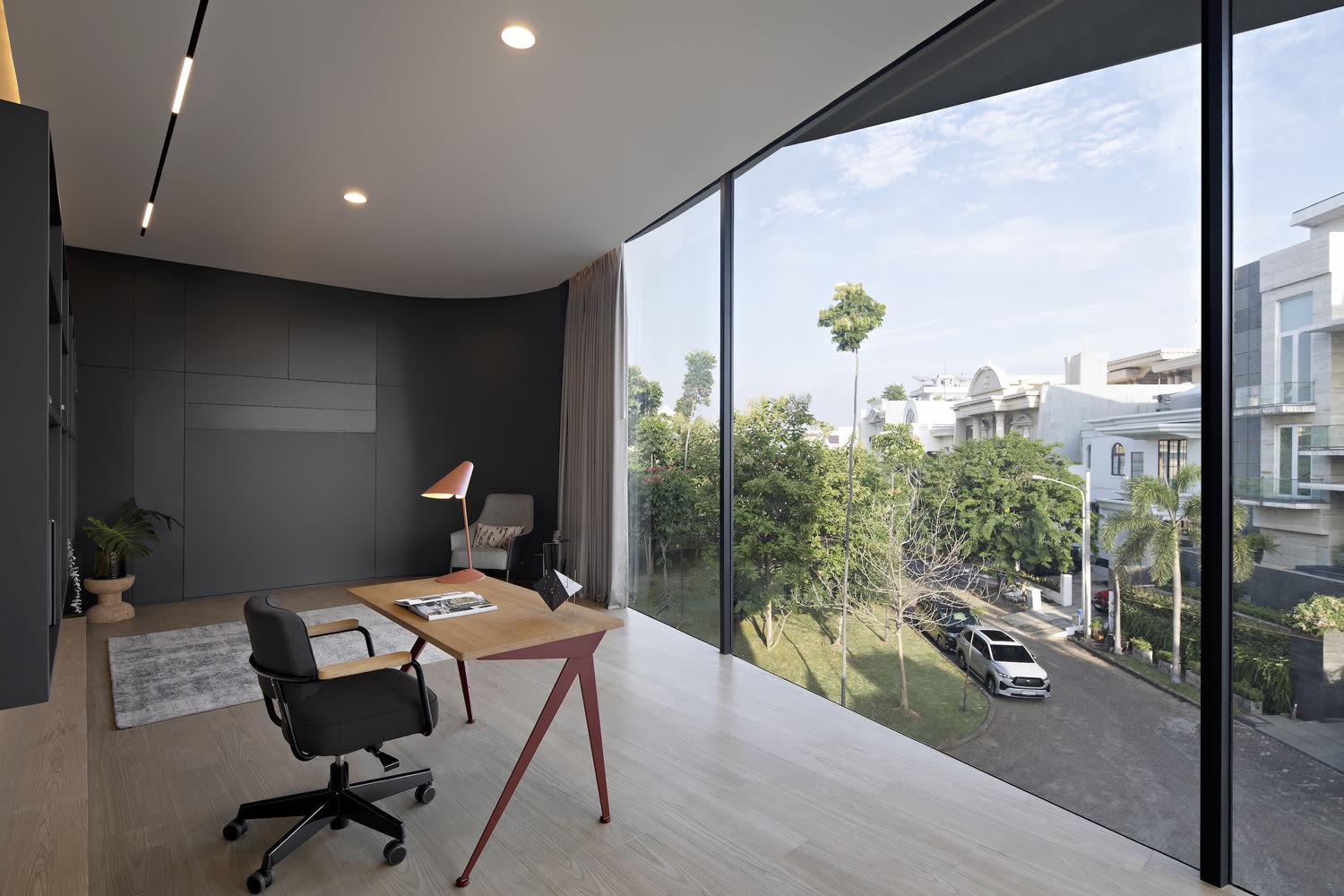
Want to visualize how new windows might look in your home? Try Feel Design's AI visualization tools to see different window styles in your actual space before making decisions.
How to Claim the Triple Pane Window Tax Credit: Step-by-Step
Step 1: Verify Product Eligibility Before Purchase
Before buying, confirm the windows are ENERGY STAR Most Efficient certified:
- Check the ENERGY STAR Most Efficient list
- Request the Manufacturer's Certification Statement
- Verify the U-factor meets requirements for your climate zone
Step 2: Keep All Documentation
You'll need these documents for your tax return:
- Manufacturer's Certification Statement: Written statement that the product qualifies
- Itemized receipts: Showing product costs and installation labor separately
- Proof of installation date: Must be installed in the tax year you're claiming
- ENERGY STAR label or documentation: Confirming Most Efficient designation
Step 3: Complete IRS Form 5695
When filing your taxes:
- Download IRS Form 5695 (Residential Energy Credits)
- Complete Part II for Energy Efficient Home Improvement Credit
- Enter total qualifying window costs on Line 17a
- Calculate 30% of costs (Line 17b)
- Enter maximum $600 if your 30% exceeds this amount
- Transfer credit amount to Schedule 3, Line 5
Step 4: Claim on Your Tax Return
The credit flows through your return as follows:
- Form 5695 → Schedule 3, Line 5 → Form 1040, Line 20
- Credit reduces your tax liability dollar-for-dollar
- Cannot reduce liability below zero (non-refundable)
Strategies to Maximize Your Window Tax Credit Savings
1. Plan Multi-Year Projects
Since the $600 cap resets annually, consider spreading large window projects across multiple years:
- Year 1: Replace front-facing windows ($600 credit)
- Year 2: Replace remaining windows ($600 credit)
- Total savings: $1,200 instead of $600
2. Combine with Other Efficiency Improvements
The total annual cap for most improvements is $1,200. Strategically combine:
- Windows/skylights: $600 max
- Doors: $500 max (exterior doors meeting requirements)
- Insulation: $600 max
- Energy audits: $150 max
3. Consider Heat Pump Synergies
Heat pumps have a separate $2,000 annual credit. Triple pane windows make heat pumps more efficient by reducing thermal load.
4. State and Utility Rebates
Many states and utilities offer additional rebates that stack with the federal credit:
- State tax credits: Some states offer additional percentage credits
- Utility rebates: Often $50-$200 per window
- DSIRE database: Search incentives at dsireusa.org

Cost-Benefit Analysis: Is the Triple Pane Upgrade Worth It?
Let's calculate the true cost and savings for a typical project:
Example: 10 Window Replacement Project
| Cost Category | Amount |
|---|---|
| Triple pane windows (10 units) | $6,000 |
| Professional installation | $2,500 |
| Total project cost | $8,500 |
| Federal tax credit (30%, capped) | -$600 |
| State rebate (example) | -$500 |
| Utility rebate (example) | -$300 |
| Net cost after incentives | $7,100 |
Energy Savings Projection
According to the Department of Energy, upgrading from single-pane to triple-pane windows can reduce heating/cooling costs by 20-30%. For a home spending $2,000 annually on HVAC:
- Annual savings: $400-$600
- Payback period: 12-18 years (after incentives)
- Lifetime savings: $8,000-$12,000 over 20 years
Beyond energy savings, triple pane windows provide:
- Noise reduction (up to 50% compared to single pane)
- Improved comfort (no cold drafts)
- UV protection for furnishings
- Increased home value (2-3% according to NAHB)
Curious how energy efficient windows might transform your space? Use Feel Design's room visualizer to see the impact of different window configurations on your home's appearance.
Common Mistakes to Avoid
1. Assuming All ENERGY STAR Windows Qualify
Standard ENERGY STAR certification is NOT sufficient. Windows must specifically meet ENERGY STAR Most Efficient criteria for the tax credit.
2. Missing the Climate Zone Requirements
A window that qualifies in Florida may not qualify in Minnesota. Always verify U-factor requirements for your specific climate zone.
3. Not Getting Manufacturer Certification
The IRS requires a written Manufacturer's Certification Statement. Without it, your credit claim may be denied.
4. Claiming for Rental or Second Homes
Only your primary residence qualifies. Installing the same windows in a rental property won't earn tax credits.
5. Installing in December, Filing Too Early
Windows installed in December 2025 can only be claimed on your 2025 return. If you need the credit for 2026 taxes, schedule installation for January 2026.
6. Exceeding the Annual Cap Without Planning
If your project costs exceed $2,000, consider splitting across tax years to maximize credits.
Frequently Asked Questions (FAQs)
- Q1: Can I claim the tax credit if I install the windows myself (DIY)?
- Yes, but only for the product cost. If you purchase qualifying triple pane windows and install them yourself, you can still claim 30% of the window cost. However, you cannot claim labor costs since you didn't pay a professional. For most homeowners, professional installation is recommended to ensure proper sealing and warranty coverage.
- Q2: Is the $600 limit per window or for all windows combined?
- The $600 limit is for ALL windows and skylights combined in a single tax year. Whether you install 1 window or 20 windows, the maximum credit for the windows/skylights category is $600 per year. This is why some homeowners choose to spread projects across multiple years.
- Q3: Do triple pane windows always qualify for the tax credit?
- No, not automatically. Triple pane windows must meet ENERGY STAR Most Efficient certification AND the specific U-factor requirements for your climate zone. Some triple pane windows may not meet these stricter standards. Always verify certification before purchasing.
- Q4: Can I combine the federal tax credit with state rebates?
- Yes, in most cases. The federal tax credit can typically be combined with state tax credits, utility rebates, and manufacturer rebates. However, some programs may reduce the eligible cost basis. Check with a tax professional for your specific situation.
- Q5: What happens if my tax liability is less than $600?
- You can only claim credit up to your tax liability. The Energy Efficient Home Improvement Credit is non-refundable, meaning it can reduce your tax bill to zero but won't generate a refund. Any unused credit cannot be carried forward to future years under current rules.
Conclusion
The 2026 federal tax credit makes energy efficient triple pane windows more accessible than ever for American homeowners. With 30% of costs covered up to $600 annually, combined with potential state and utility incentives, upgrading to high-performance windows offers both immediate tax savings and long-term energy cost reductions.
To maximize your benefits:
- Verify ENERGY STAR Most Efficient certification before purchasing
- Keep all documentation including Manufacturer's Certification Statement
- Consider multi-year project planning to maximize credits
- Stack federal credits with state and utility rebates
- File IRS Form 5695 with your tax return
Ready to visualize how new energy efficient windows might transform your home? Visit Feel Design's Explore page to upload photos of your rooms and see different window styles, sizes, and configurations using our AI-powered visualization tools. Make confident decisions about your window upgrade before committing to this important home improvement investment.