Invisible Smart Home Tech: Hide Devices, Keep the Style
Quick Answer
Invisible smart home integration means embedding technology—speakers, sensors, lighting controls, and displays—directly into walls, ceilings, and furniture so devices completely disappear from view. The key is planning during renovation or remodel, using in-wall components, choosing furniture with hidden charging capabilities, and working with a professional integrator who understands both technology and interior design.
Key Takeaways
- Plan tech placement before renovation – Running wires after drywall is expensive and disruptive
- Use in-wall or in-ceiling speakers – Brands like Sonance, KEF, and Bowers & Wilkins offer audiophile-quality invisible options
- Choose motorized shades with hidden tracks – Lutron Palladiom and Hunter Douglas PowerView disappear into ceiling pockets
- Install flush-mount smart switches – Lutron Palladiom keypads and Crestron horizon switches match any décor
- Hide hubs and routers – Dedicate a closet or use furniture with ventilated tech compartments
- Use wireless charging surfaces – Furniture brands now offer built-in Qi charging in nightstands and side tables
- Consider invisible TV solutions – Samsung The Frame, LG Gallery OLED, or motorized lifts that hide screens behind artwork
What Is Invisible Smart Home Technology?
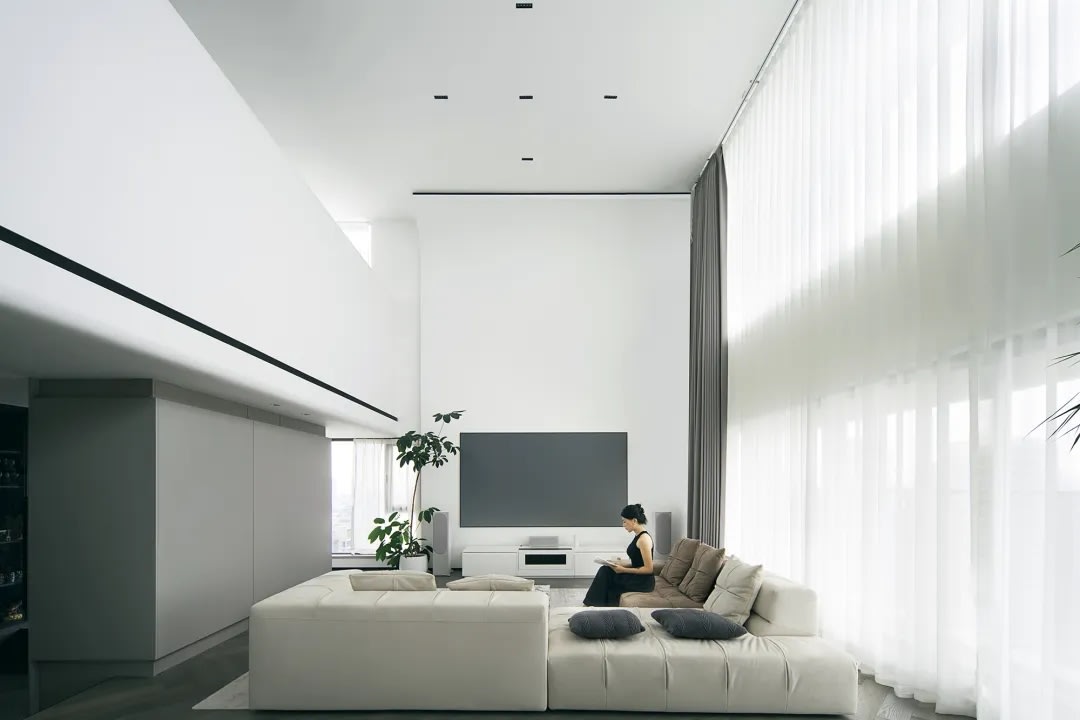
Invisible smart home technology refers to the strategic concealment of connected devices, wiring, and control interfaces so your living space maintains a clean, uncluttered aesthetic. Rather than visible smart speakers on shelves or tangled cables behind your TV, invisible integration embeds these elements directly into your home's architecture.
This approach has gained significant momentum as homeowners increasingly prioritize design over visible gadgetry. According to the Custom Electronic Design & Installation Association (CEDIA), demand for "technology that disappears" has grown 40% year-over-year since 2023.
Key Categories of Invisible Tech
- Audio: In-wall, in-ceiling, and invisible (behind-drywall) speakers
- Visual: Hidden TVs, motorized artwork lifts, projector systems
- Lighting: Recessed fixtures, LED cove lighting, motorized shades
- Control: Flush-mount keypads, voice control, app-based automation
- Infrastructure: Structured wiring, hidden network equipment, power management
Step-by-Step: How to Plan Invisible Smart Home Integration
Successfully hiding smart home technology requires careful planning—ideally before construction or during a major renovation. Here's a proven process used by professional integrators:
Step 1: Define Your Technology Goals
Before selecting products, identify what you want to control: lighting, audio, video, climate, security, or all of the above. This determines infrastructure requirements.
Step 2: Hire a CEDIA-Certified Integrator Early
Bring in a professional during the architectural planning phase—not after drywall is installed. They'll coordinate with your architect, interior designer, and electrician.
Step 3: Plan Structured Wiring
Run low-voltage wiring (Cat6a, coaxial, speaker wire) to every room where you want technology. Include conduit for future upgrades. Budget approximately $3,000–$8,000 for a typical 2,500 sq ft home.
Step 4: Designate a Technology Closet
Allocate a ventilated closet or cabinet for network equipment, AV receivers, and smart home hubs. This single location houses all the "visible" tech, keeping living spaces clean.
Step 5: Select Invisible-First Products
Choose speakers, switches, and displays designed for concealment from the start—retrofitting is always more expensive.
Step 6: Coordinate Finishes
Work with your designer to match switch plates, grilles, and keypads to wall colors and textures.
Top Products for Hidden Smart Home Integration in 2026
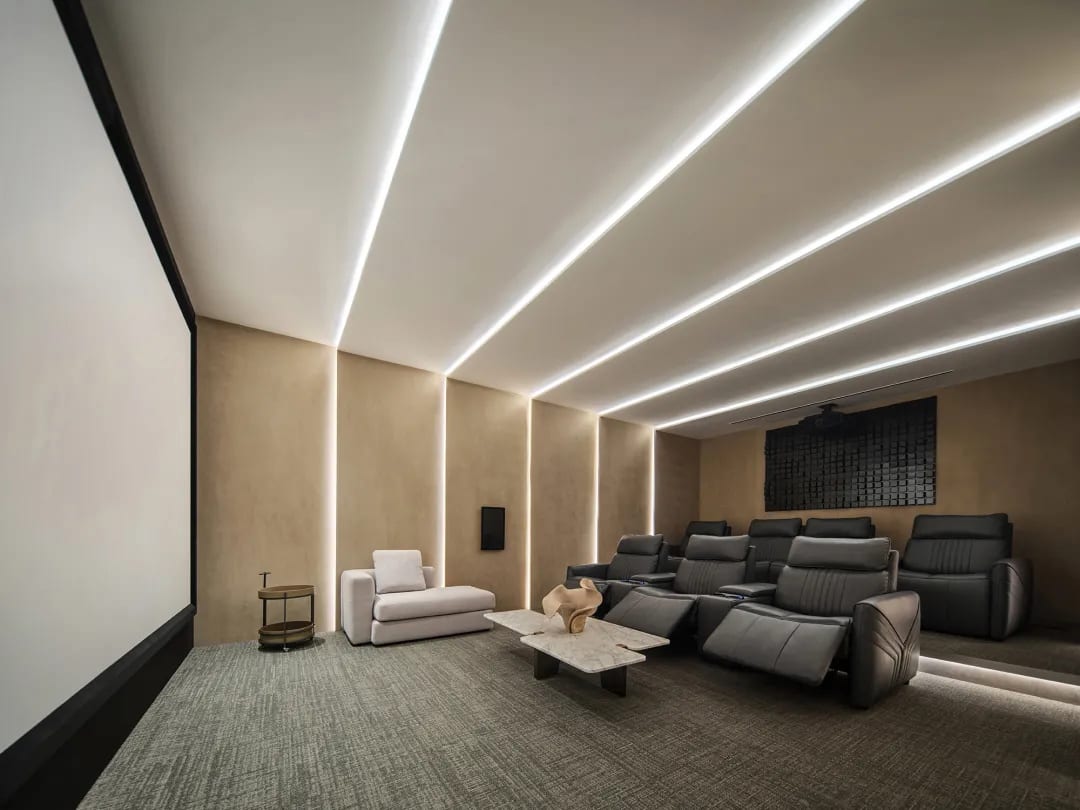
Invisible Speakers
| Brand | Product | Price Range | Best For |
|---|---|---|---|
| Sonance | Invisible Series | $1,500–$3,000/pair | Behind-drywall installation |
| Amina | Mobius Series | $2,000–$4,500/pair | Audiophile-grade invisible |
| KEF | Ci Series | $800–$2,500/pair | In-ceiling, paintable grilles |
Hidden TV Solutions
| Solution | Price Range | Pros | Cons |
|---|---|---|---|
| Samsung The Frame | $1,000–$4,500 | Art mode, thin profile | Still visible as frame |
| Motorized TV Lift | $2,500–$8,000 | Completely hidden | Requires furniture modification |
| Projector + Screen | $3,000–$15,000 | Screen retracts completely | Requires dark room |
Flush-Mount Controls
- Lutron Palladiom Keypads: Premium finish options, integrates with RadioRA 3
- Crestron Horizon: Minimal bezel, customizable buttons
- Control4 T4: Touchscreen that looks like wall art when idle
Real Living Room Examples
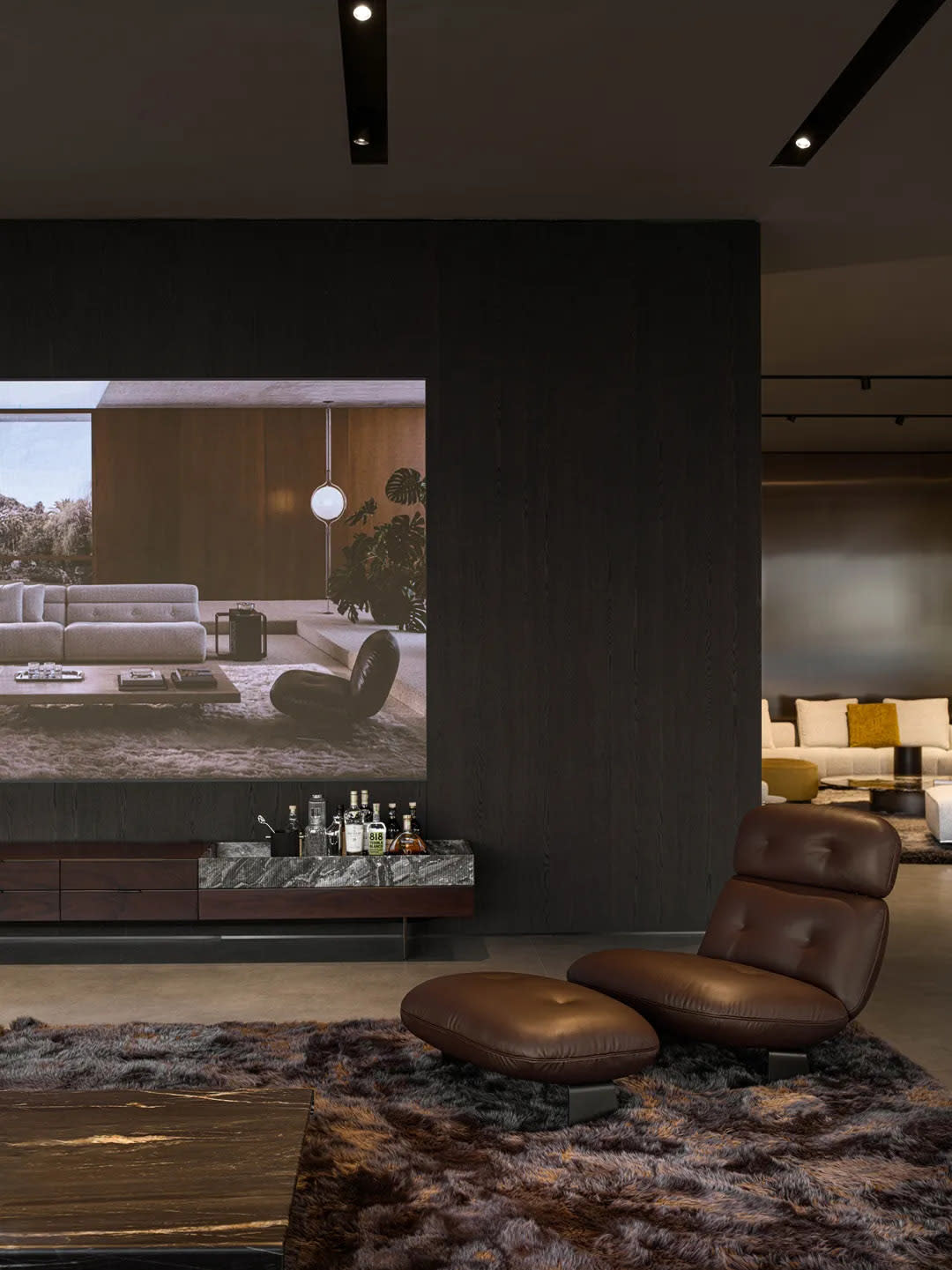
Case Study: Manhattan Penthouse
A 3,200 sq ft Manhattan penthouse achieved completely invisible technology integration:
- 28 Sonance Invisible speakers throughout (no visible grilles anywhere)
- Sony 4K laser projector with 120" motorized drop-down screen
- Lutron Palladiom shades recessed into ceiling pockets
- Dedicated AV closet with remote rack management
- Total investment: $185,000 (excluding construction)
Case Study: California Modern Home
A 4,500 sq ft home in Los Angeles balanced budget with invisibility:
- KEF Ci in-ceiling speakers in living areas ($12,000)
- Samsung The Frame TVs in bedrooms ($8,000)
- Motorized lift for 85" LG OLED in main living room ($15,000)
- Lutron RadioRA 3 throughout ($22,000)
- Total investment: $57,000
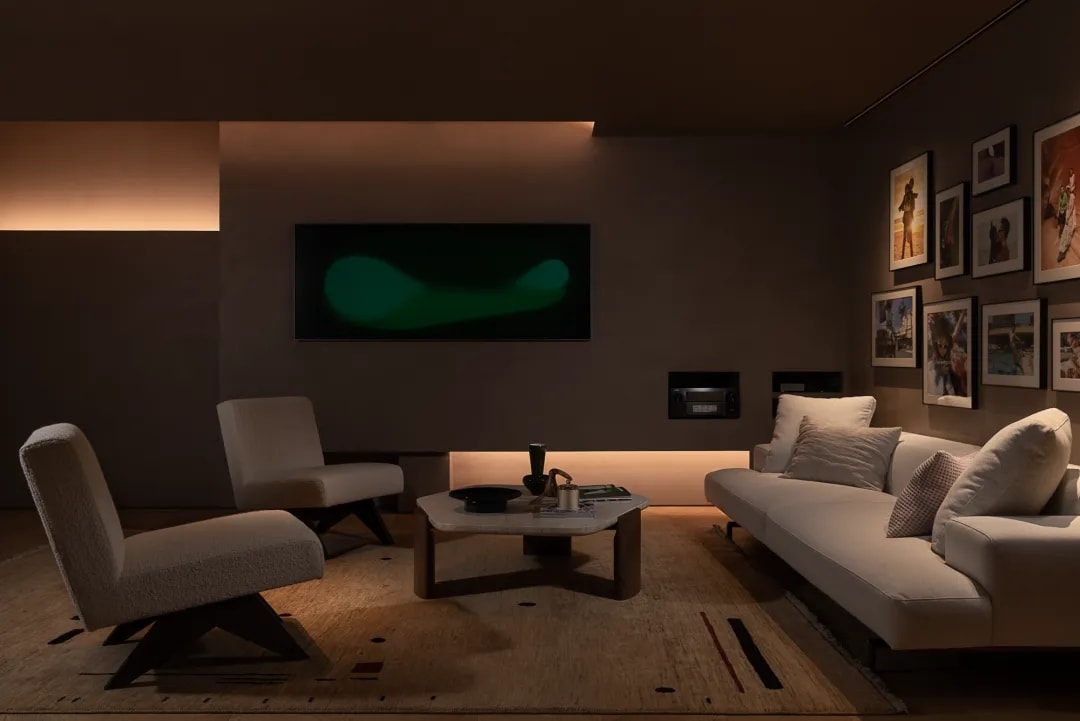
Use Feel Design's visual search to find similar living room designs and discover how other homeowners have integrated invisible technology.
Expert Insights & 2026 Trends
According to the American Society of Interior Designers (ASID), "technology invisibility" ranked as the #3 client priority in their 2025 Design Trends Report.
Key 2026 Trends
- Matter Protocol Adoption: Universal smart home standard makes invisible integration easier across brands
- AI-Powered Automation: Systems that learn preferences without visible interfaces
- Transparent OLED: LG's transparent displays turn windows into screens
- Wireless Power: Emerging technology to eliminate charging cables entirely
- Acoustic Fabric Panels: Wall art that doubles as speakers
The National Association of Home Builders (NAHB) reports that 67% of new luxury homes now include pre-wiring for invisible smart home integration, up from 34% in 2020.
Frequently Asked Questions
- How much does invisible smart home installation cost?
- A complete invisible smart home integration typically costs $25,000–$200,000+ depending on home size and technology scope. Basic invisible audio starts around $5,000. Budget 3-5% of your home's value for comprehensive integration.
- Can I retrofit invisible technology into an existing home?
- Yes, though it's more expensive than new construction. Invisible speakers can be added by cutting drywall and patching. Running new wiring may require opening walls. Budget 30-50% more for retrofit vs. new construction.
- What's the best way to hide a TV in a living room?
- Top options include: Samsung The Frame (displays art when off), motorized lifts that lower TV into furniture, motorized artwork panels that slide to reveal the screen, or ceiling-mounted projectors with retractable screens.
- Do invisible speakers sound as good as traditional speakers?
- Premium invisible speakers from Sonance, Amina, and Stealth Acoustics deliver audiophile-quality sound. They excel at ambient music and home theater. However, dedicated floor-standing speakers still outperform them for critical listening.
- What is Matter and why does it matter for invisible smart homes?
- Matter is a universal smart home protocol launched in 2022 that allows devices from different brands to work together seamlessly. It simplifies invisible integration because you're no longer locked into a single ecosystem.
Conclusion: Design Your Invisible Smart Home
Invisible smart home technology transforms how we live with connected devices—eliminating visual clutter while retaining full functionality. Whether you're building new or renovating, the key is early planning, professional integration, and selecting products designed for concealment from the start.
The investment pays dividends in both aesthetics and home value. As buyers increasingly expect seamless technology, an invisibly integrated smart home commands premium resale prices.
Ready to visualize invisible technology in your space?
References
- American Society of Interior Designers (ASID) (2025). Interior Design Trends Report.
- National Association of Home Builders (NAHB) (2025). Smart Home Integration Statistics.
- CEDIA (2024). Residential Technology Industry Outlook.