Curved Kitchen Island Ideas for Small Kitchens (2026)
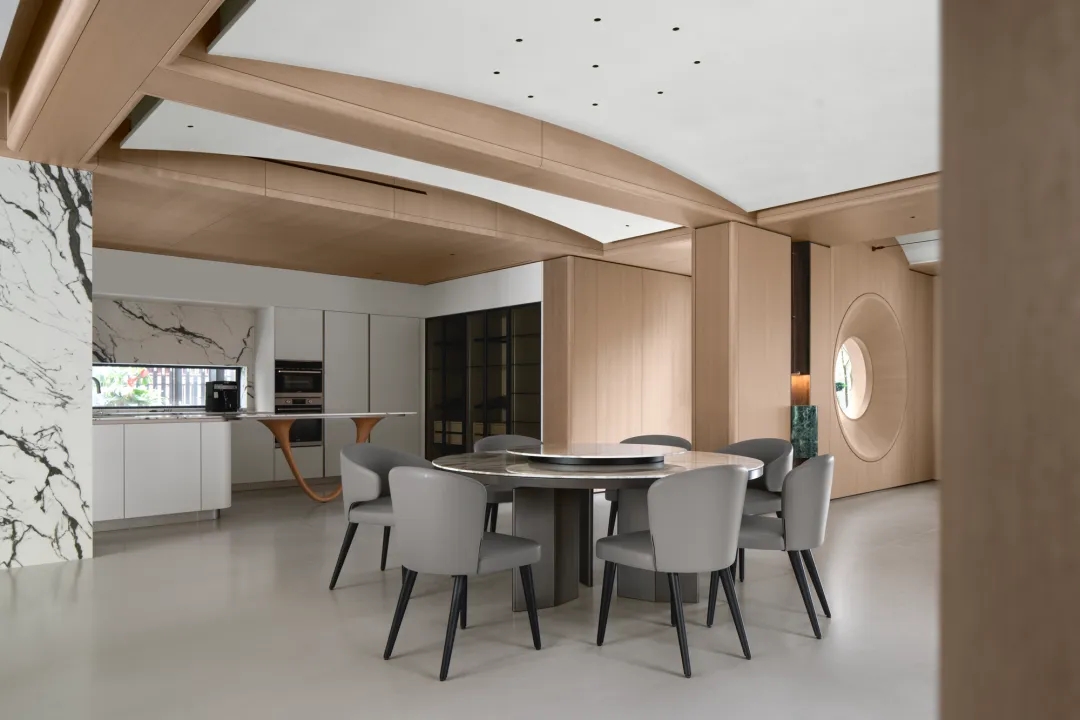
Curved kitchen islands can work beautifully in small kitchens because their rounded edges soften tight traffic paths and let people pass without bumping square corners. A half-circle or rounded-end island typically fits a footprint of 4 to 6 feet, preserves NKBA-recommended 36 to 42 inch walkways, and adds two to three casual seats.
Key Takeaways
- Rounded edges remove the sharp corners that bruise hips in tight kitchens, improving real-world flow more than raw square footage suggests.
- Four island shapes suit small spaces: rounded-end (most space-efficient), half-circle/D-shape, oval, and a compact full round for open plans.
- Keep at least 36 to 42 inches of walkway around the island (NKBA-style guidance); a curve can shave a few inches at pinch points.
- A curved island usually fits a 4 to 6 ft footprint and seats two to three on the open arc, ideal for breakfast and casual entertaining.
- Pair veined stone tops with warm wood bases for the 2026 warm-minimalist and japandi look that flatters soft geometry.
- Curved cabinetry costs more than straight runs, so budget for custom radius work and confirm the shape before ordering.
- Use AI room visualization to preview a curved island in your own kitchen before committing to a remodel.
Do Curved Islands Actually Work in Small Kitchens?
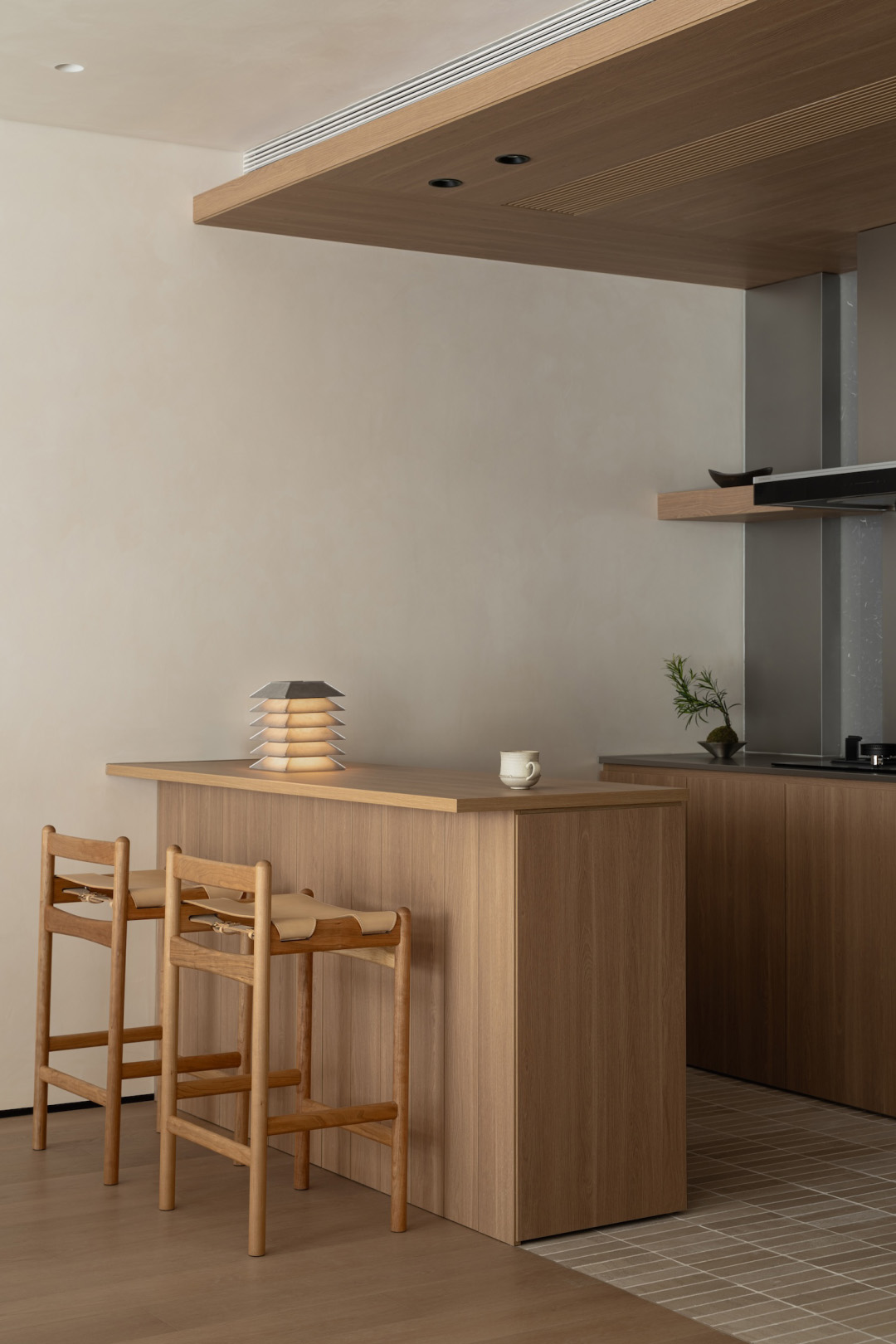
The honest answer to the big objection: a curve does not waste your square footage. A rounded island occupies roughly the same floor area as a straight one of the same length. What it changes is how the space feels and flows when bodies move through it.
Curved geometry earns its place in a tight kitchen for three reasons:
- No sharp corners at pinch points. The 90-degree corner of a straight island is exactly where hips and elbows catch. A rounded end lets you pivot past it.
- Better perceived circulation. A continuous arc reads as one flowing path rather than a hard edge, so the room feels more open than the tape measure says.
- Softer sightlines. In an open-plan layout, a curve points the eye toward the living area instead of slicing the room with a rigid line.
This approach suits small, galley-adjacent, and open-plan kitchens best. Soft, rounded forms are a headline 2026 direction, with industry trend trackers reporting sharp jumps in searches for rounded and curved islands. The rest of this guide covers the shapes, the clearance math, and the warm material palette that make a curve work in a genuinely small footprint.
How to Choose and Fit a Curved Island (Step by Step)
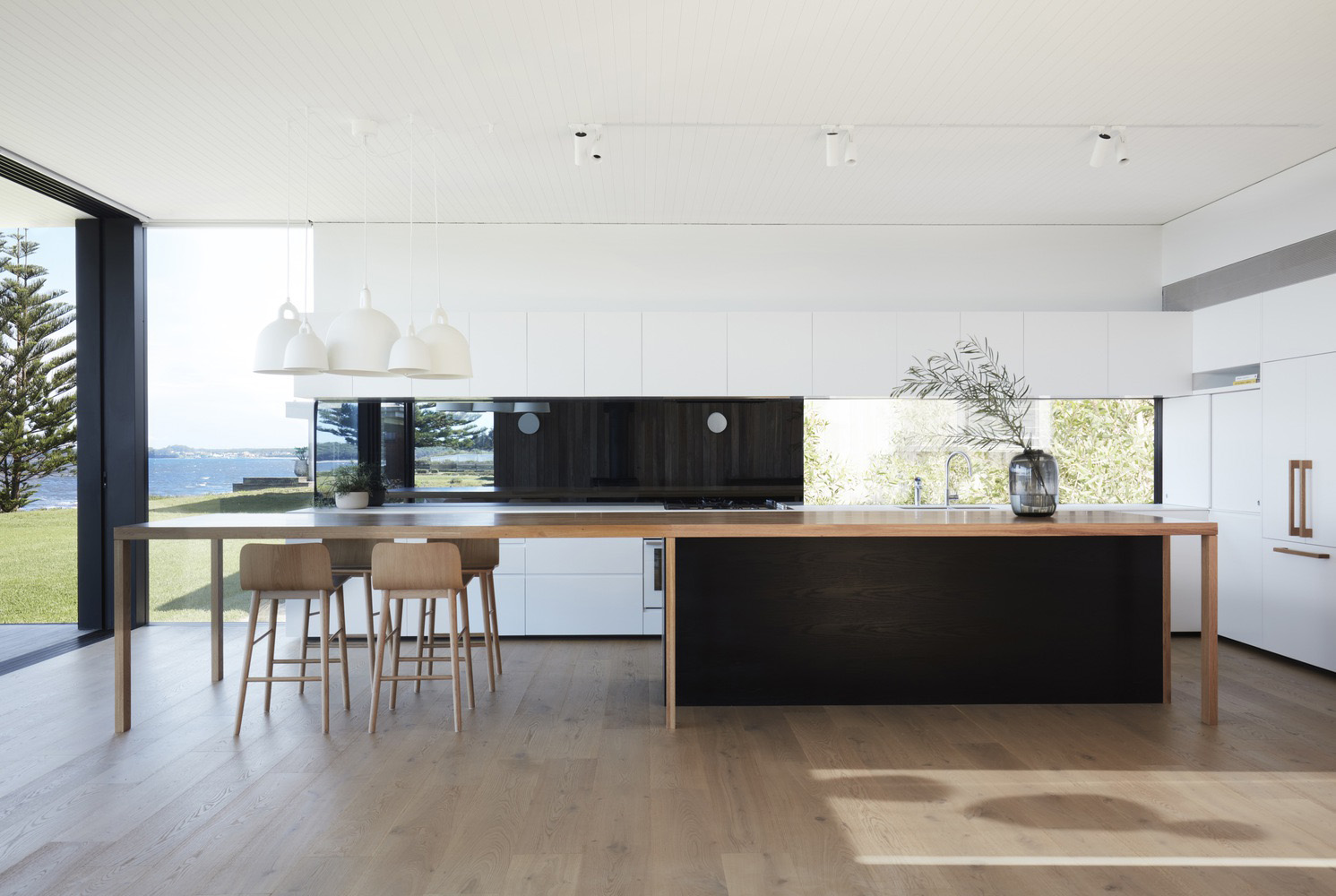
Fitting a curved island is less about taste and more about disciplined measurement. Work through these five steps in order before you spend a dollar on cabinetry:
- Step 1 — Measure your footprint and walkways. Map the open floor area and record current walkway widths in inches on every side a person passes. Know your real clearances first.
- Step 2 — Pick a curve for your traffic pattern. Rounded-end for tight, galley-adjacent rooms; half-circle when one side opens to a living space; oval or full round for genuinely open plans.
- Step 3 — Size for 36 to 42 inch clearances. Shrink the island until every walked side keeps that gap, with extra depth on the seating side so stools can pull out.
- Step 4 — Orient the curve toward the flow. Point the open, curved edge toward the main traffic path or the adjoining room so the soft side guides movement.
- Step 5 — Mock it up before ordering. Tape the outline on your floor or render it with an AI visualizer, then walk the paths before committing to custom radius work.
The order matters: measuring and shaping before buying is what separates a remodel that breathes from one that crowds your only walkway.
4 Curved Island Shapes for Tight Footprints
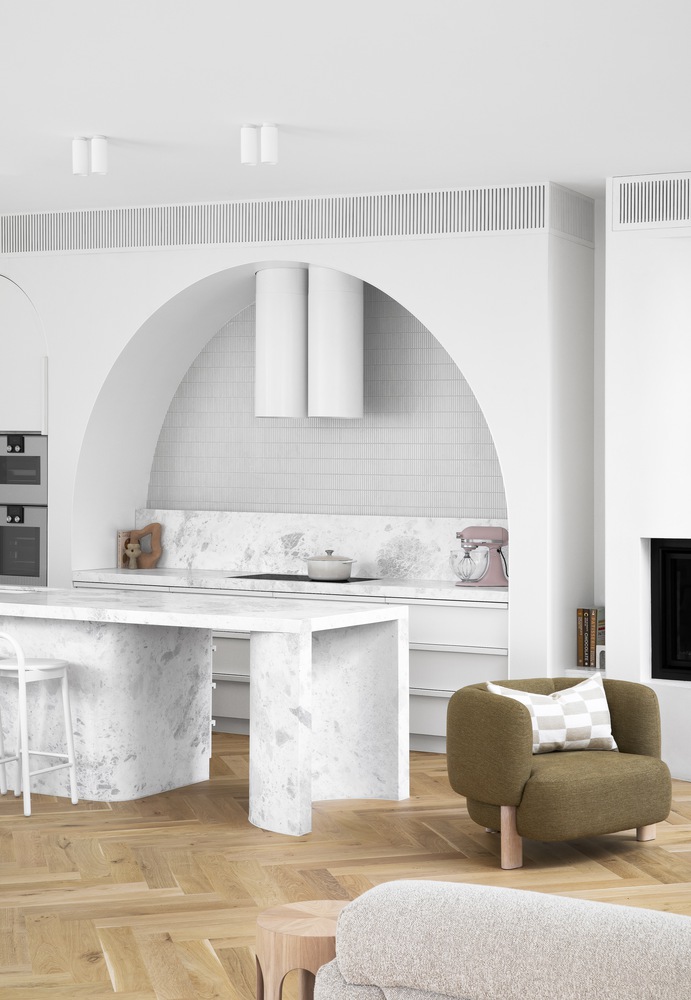
Not every curve fits every room. These four shapes cover the realistic options for a small or open-plan kitchen, from the most space-efficient to the most sculptural:
- Rounded-end (capsule). A straight body with one or both ends rounded. The most space-efficient choice, it softens just the high-traffic end while keeping full counter and storage along the straight run.
- Half-circle / D-shape. A straight back set against cabinets with a curved front. Ideal when one side opens to a dining or living area, putting the seating on the gentle arc.
- Oval. An elongated all-around curve. It threads narrow open-plan runs well and gives a continuous, flowing edge with no corners at all.
- Compact full round. A sculptural centerpiece for genuinely open layouts. It needs clearance on all sides, so reserve it for rooms that can give a circle room to breathe.
| Shape | Best for | Typical footprint | Seats |
|---|---|---|---|
| Rounded-end | Tight, galley-adjacent | 4–5 ft long | 2 |
| Half-circle / D | One open side | 4–6 ft long | 2–3 |
| Oval | Narrow open-plan run | 5–6 ft long | 2–3 |
| Full round | Open layouts | 4 ft diameter | 3–4 |
Clearances, Walkways, and Seating Math
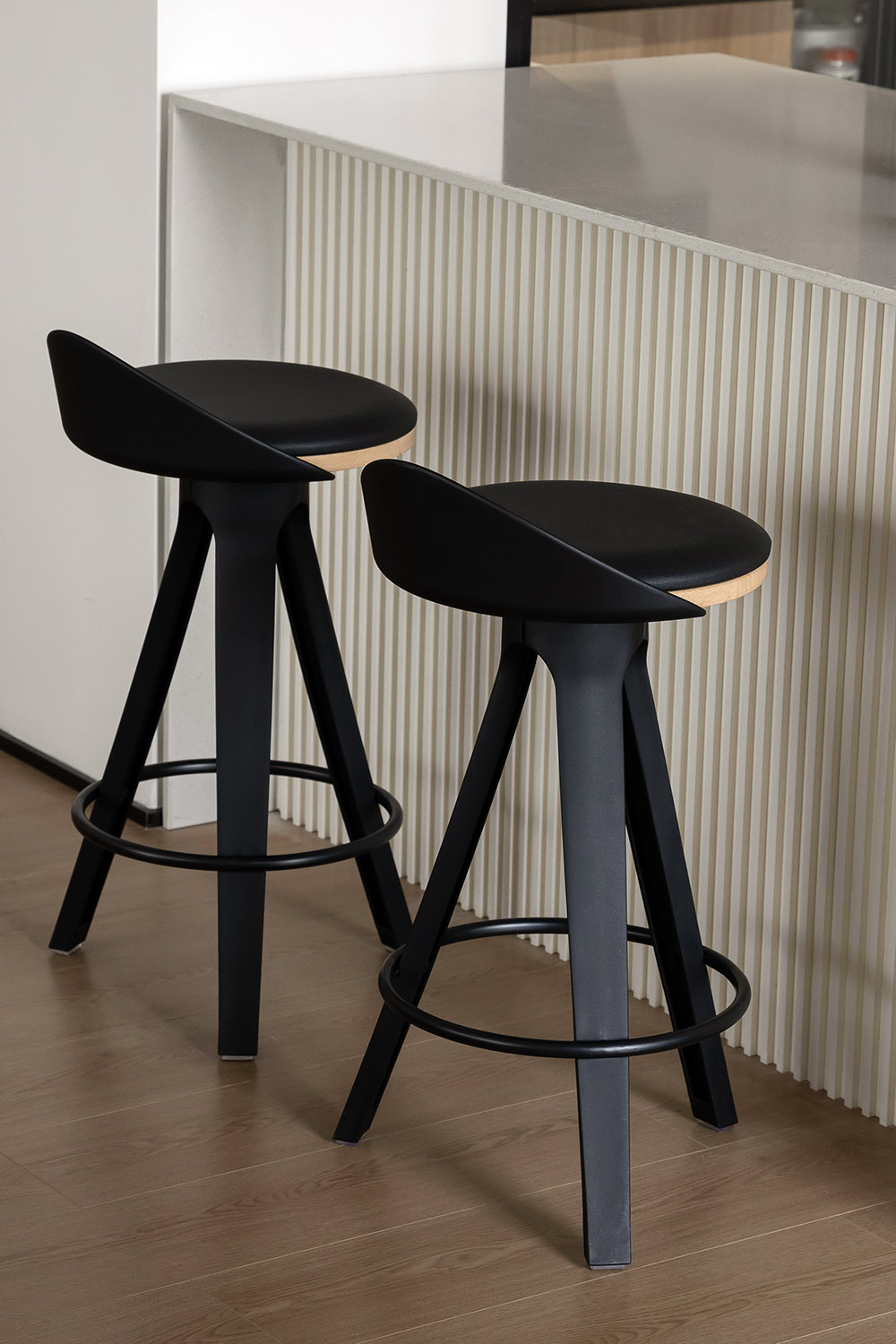
Clearance is where a curved island either succeeds or crowds the room. Use these rules of thumb, adapted from NKBA-style kitchen planning guidance, to keep the layout livable:
- Walkways: Keep 36 to 42 inches around the island on every walked side. A curve helps most at pinch points, where its arc trims a few inches versus a square corner.
- Seating width: Allow about 24 inches of arc per stool so elbows do not collide.
- Knee depth: Plan roughly 15 to 18 inches of clear overhang under the counter so legs tuck in comfortably.
- Behind seated diners: Reserve 36 inches or more so people can pass behind the stools without anyone standing up.
Translate those into seat counts by footprint:
| Curved frontage | Comfortable seats | Notes |
|---|---|---|
| ~4 ft | 2 | Breakfast for a couple; tightest workable arc |
| ~5 ft | 2–3 | Two roomy or three snug stools |
| ~6 ft | 3 | Casual entertaining without crowding |
If the numbers do not work, shrink the island or switch to a rounded-end shape before sacrificing a walkway. A crowded path undoes everything a curve is meant to fix.
Materials and Color: The 2026 Warm-Minimalist Palette
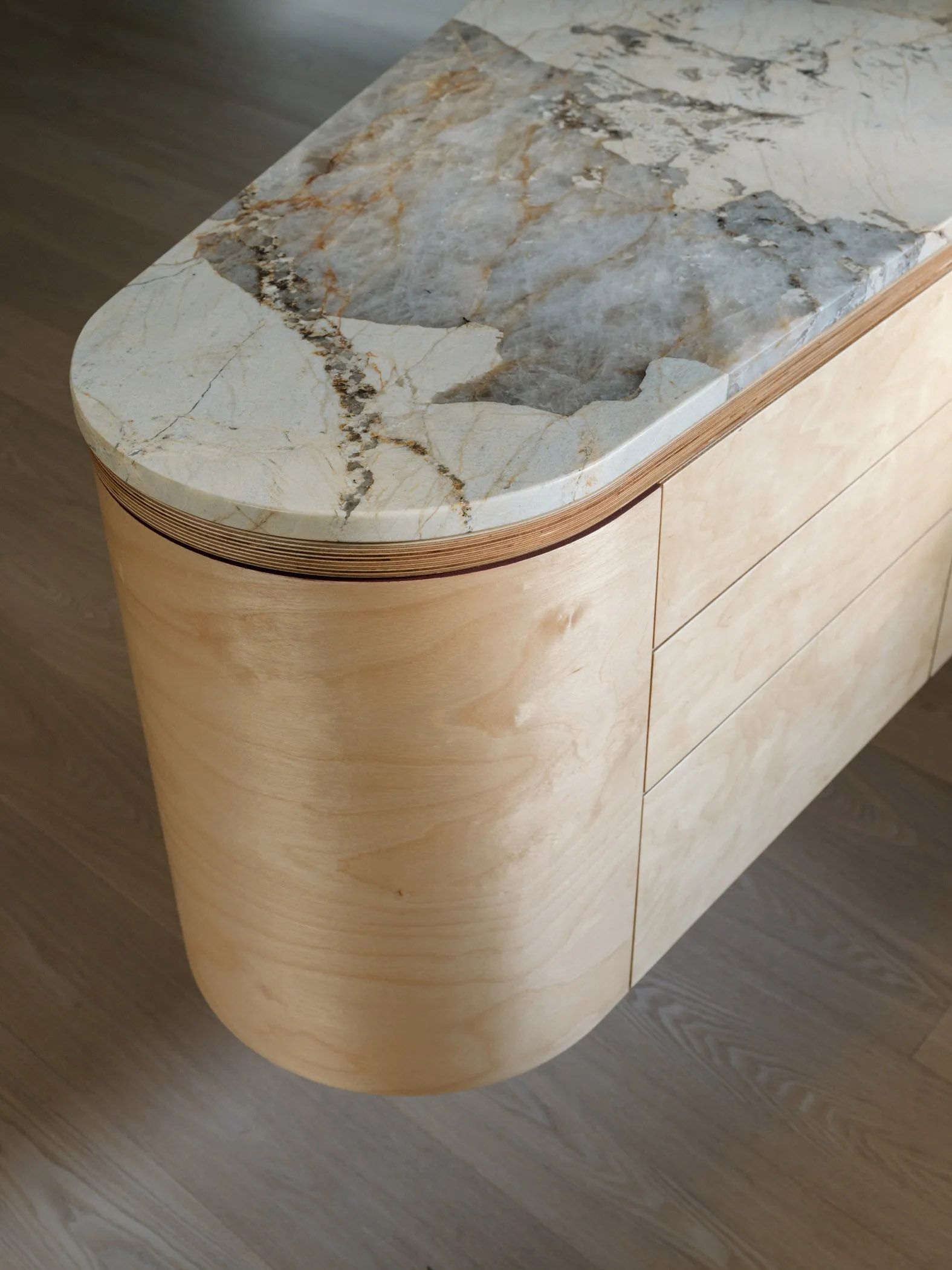
Soft geometry asks for soft materials. The 2026 warm-minimalist and japandi direction pairs flowing stone with natural wood, and a curve is the perfect canvas for it. Build the look in three layers:
- Countertop: Veined or honed stone reads beautifully on a curve, where the pattern wraps the arc. Quartzite and marble-look quartz are durable, on-trend choices that resist the staining solid marble is prone to.
- Base color: Warm neutrals flatter rounded forms. Reach for mushroom, taupe, cream, or sage on the cabinetry rather than stark white or cool gray.
- Finishing touches: A waterfall edge that follows the curve, brass or matte-black hardware, and under-counter lighting that grazes the arc all add quiet polish.
The goal is contrast without harshness: a light, veined stone top floating over a warm wood or muted-color base. That combination is exactly what makes a curved island feel intentional rather than novelty. American Society of Interior Designers commentary on warm, tactile, nature-led interiors echoes this shift toward grounded, organic palettes. Keep the rest of the room calm so the island's shape and stone do the talking.
Curved vs. Straight: Costs, Trade-offs, and Visualizing It First
A curve buys softness and flow, but it asks for a higher budget and a little planning patience. Weigh the trade-offs honestly:
| Curved island | Straight island | |
|---|---|---|
| Flow at pinch points | Better — no corners | Catches hips and elbows |
| Cost | Higher — custom radius | Lower — standard runs |
| Storage geometry | Trickier on the arc | Simple, modular |
| Visual impact | Sculptural focal point | Clean but expected |
On budget, expect a premium. Curved cabinet boxes and radiused stone tops require custom fabrication, so a modest rounded-end upgrade might add a few hundred dollars, while a full custom round can add several thousand on top of a standard island in USD terms. The exact figure depends on your stone, your fabricator, and the radius.
This is precisely why previewing matters. Curves are hard to picture from a floor plan, and a custom shape is expensive to undo. Rendering the island in a photo of your own kitchen lets you test a rounded-end against an oval risk-free, comparing flow and seating before a single slab is cut.
Frequently Asked Questions
Do curved kitchen islands save space?
Not in raw square footage — a curve uses about the same area as a straight island. What it saves is friction: rounded edges remove sharp corners at pinch points, so people slip past without bumping into them. In a small kitchen, that softer traffic flow often makes the room feel roomier and safer than the measurements alone suggest.
What is the smallest curved island that still seats people?
A rounded-end or half-circle island around 4 feet long can comfortably seat two on its open arc, allowing roughly 24 inches of width per stool. To seat three, plan for about 6 feet of curved frontage. Keep 36 to 42 inches of walkway behind the stools so seated diners do not block the kitchen's main traffic path.
Are curved islands more expensive than straight ones?
Usually, yes. Curved cabinet boxes and radiused stone tops require custom fabrication, which adds to material and labor costs versus standard straight runs. The premium varies by material and shape, with a full round costing more than a simple rounded end. Confirm the exact shape and dimensions before ordering, since custom curves are hard to alter later.
What countertop works best on a curved island?
Veined stone and stone-look quartz suit curved islands well because their flowing patterns echo the soft geometry. Quartzite and marble-look quartz are durable, popular 2026 choices. For a warm-minimalist or japandi look, pair a honed light stone top with a warm wood base. Curved tops need skilled fabrication, so choose a slab installer experienced with radiused edges.
How do I know a curved island will fit before I buy it?
Mock it up first. Tape the island's curved outline onto your floor and walk the paths, or use an AI room visualizer to render the shape in a photo of your actual kitchen. Both let you test clearances and seating before committing to custom cabinetry, so you avoid an expensive shape that crowds your real-world walkways.
Conclusion
A curved island can give a small kitchen the softer flow and warm, sculptural focal point that defines 2026 design — but the only way to truly know if a shape fits your footprint is to see it in your space. Upload a photo of your kitchen to Feel Design Explore at /en/explore and render curved, rounded, and oval islands in your own room before you commit to a single measurement or fabrication quote.
References
- Houzz Industry Reports (2026). Summer kitchen and remodeling trend data on rounded and curved islands.
- American Society of Interior Designers (ASID) (2026). Commentary on warm, tactile, nature-led interior palettes.
- Better Homes & Gardens (2026). Kitchen island layout and clearance guidance for home cooks.