Galley Kitchen Remodel Ideas on a Small Budget: 2026 Guide
What a small-budget galley kitchen remodel actually means in 2026
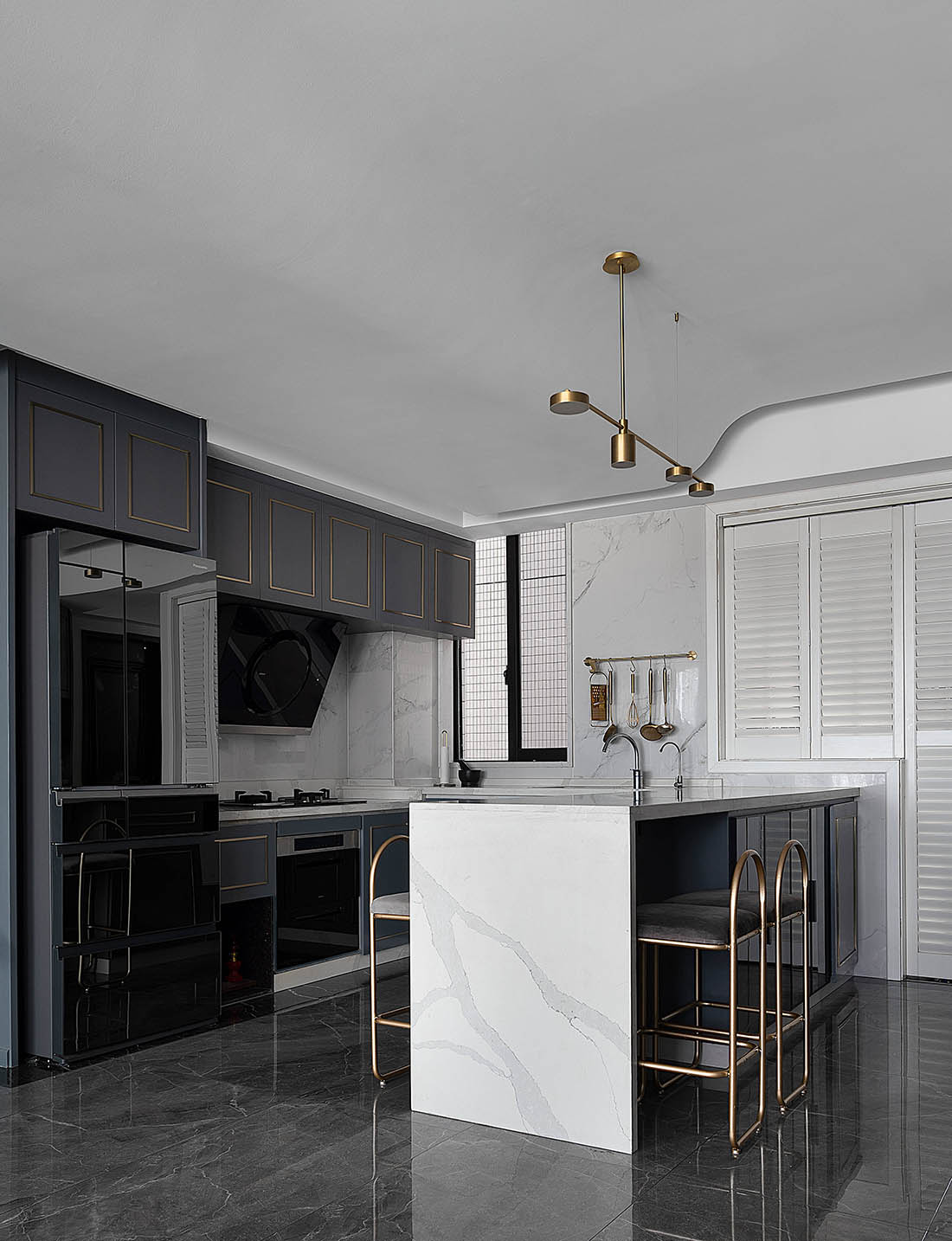
A small-budget galley remodel for 2026 hits five high-ROI moves: reface cabinets in warm white or navy two-tone, remove uppers from one wall, swap to quartz drop-in counters, add 2700K under-cabinet LED, and switch hardware to brushed brass. The package lands at $9K–$15K, previewed on a photo of your kitchen first.
The $8K–$18K bracket buys refacing, hardware, lighting, counters, paint, backsplash, and soft demolition. It does not buy new appliances, a rewire, or plumbing relocation — each adds $2K–$6K, per 2026 pricing from Block Renovation and the NKBA.
Galley layouts are friendly to this budget: a short cabinet run (8–14 linear feet), no island, predictable lighting. $5K is a refresh; $25K+ is a full reno. $8K–$18K is the sweet spot.
Timing matters. Quote season opens around Memorial Day; contractors book through July across NYC, LA, Chicago, Boston, Seattle, Denver, and Austin. Lock color and layout before late June.
Key takeaways
- Reface, don't replace — refacing runs 30–50% of full replacement and delivers the biggest visual lift per dollar.
- Remove uppers from one wall (sink or window) and a 10–14 ft galley reads almost two feet wider.
- Two-tone (navy or forest green + warm-white uppers) is the 2026 designer pick; warm white alone is the safer ageing play.
- Lighting trifecta — 2700K recessed + under-cabinet LED + one warm pendant — delivers 80% of the lift for under $1,200.
- Quartz drop-in counters hit the $1,800–$3,400 sweet spot.
- Backsplash and hardware are the last 15%, picked after cabinets.
- Preview three cabinet colors and two backsplashes on a photo of your kitchen before any deposit.
How to plan a $15K galley remodel in 7 designer steps
The seven steps below mirror how designers profiled on Houzz and Architectural Digest approach a small-budget galley — design decisions first, vendor decisions second.
- Measure twice. Record linear feet of base cabinets, upper cabinets, counter run, and aisle width. Photograph from both ends with a wide-angle phone lens.
- Decide reface or replace. If boxes are plywood and square, reface. If they sag, swell, or are MDF flake, replace. This call swings $4K–$8K.
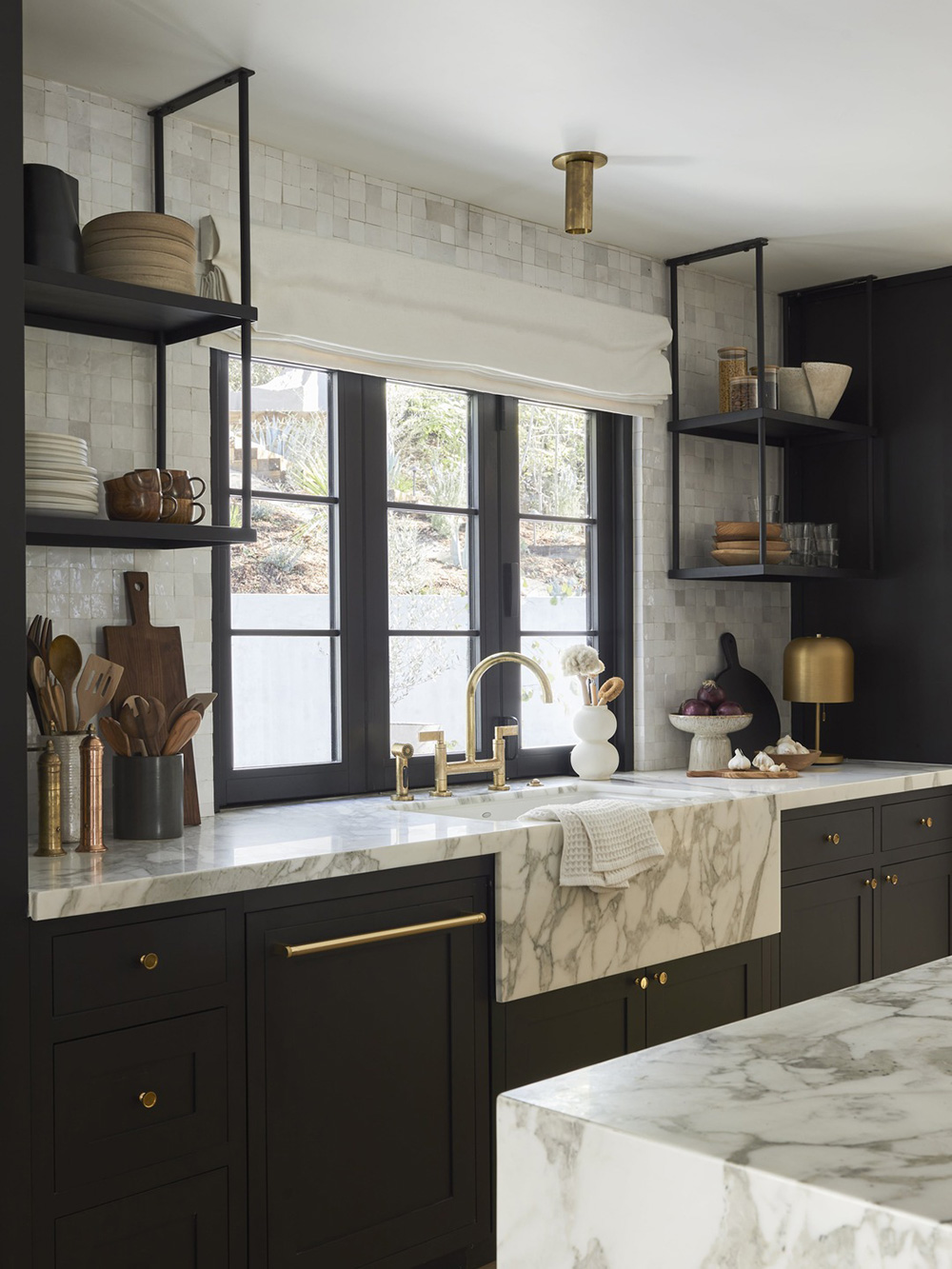
- Lock the cabinet color. Warm white is the safe spine; navy or forest-green base with warm-white uppers is the 2026 two-tone. Test both on a photo first.
- Choose the counter. Quartz drop-in fabricated to your dimensions. Skip slab quartz at this tier and butcher block if you cook with running water daily.
- Plan the lighting. 2700K–3000K recessed on a dimmer, continuous under-cabinet LED tape, one warm pendant on the sink wall.
- Pick hardware and backsplash last. Brushed brass or matte black pulls — 4" cup pulls on drawers, 5" bar pulls on doors. Backsplash matches cabinet undertone.
- Preview the full combination on a photo of your kitchen in Feel Design Explore before signing.
Reface or replace? The single decision that controls 50% of your budget
Refacing means new doors, drawer fronts, end panels, and matched veneer over your existing boxes. For 10–14 linear feet, the 2026 average is $4K–$9K. It's the right call when boxes are plywood, still square, and free of water damage. Knock on a box; if it rings solid, reface.
Full replacement strips out the cabinets and installs new boxes, doors, and hardware. For the same footprint, 2026 pricing runs $9K–$22K. Replacement only earns its premium when boxes are MDF flake, swollen, or laid out wrong. For everyone else, the visual gap closes to ~20%.
| Approach | Cost (10–14 ft) | Downtime | Visual lift | Longevity |
|---|---|---|---|---|
| Reface | $4K–$9K | 3–5 days | High | 10–15 years |
| Partial replace (uppers only) | $6K–$12K | 5–8 days | High | 15+ years |
| Full replace | $9K–$22K | 8–14 days | Highest | 20+ years |
For long-lease renters, peel-and-stick veneer doors plus painted boxes deliver an 80% visual upgrade for under $900 — not durable past five years, but reversible at move-out. Refacing is what makes the sub-$15K number work.
Remove upper cabinets from one wall: the 2026 move that makes a galley feel bigger
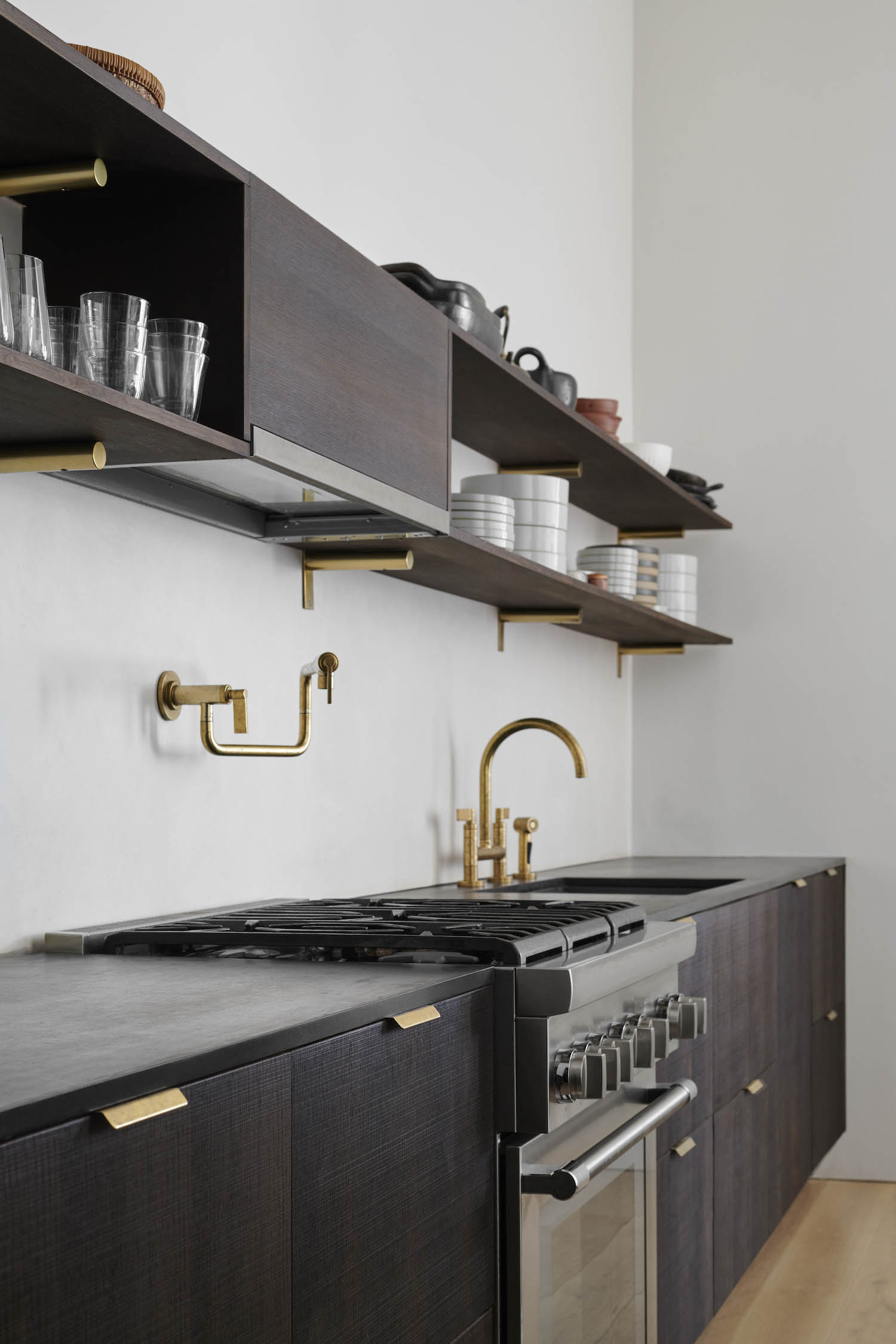
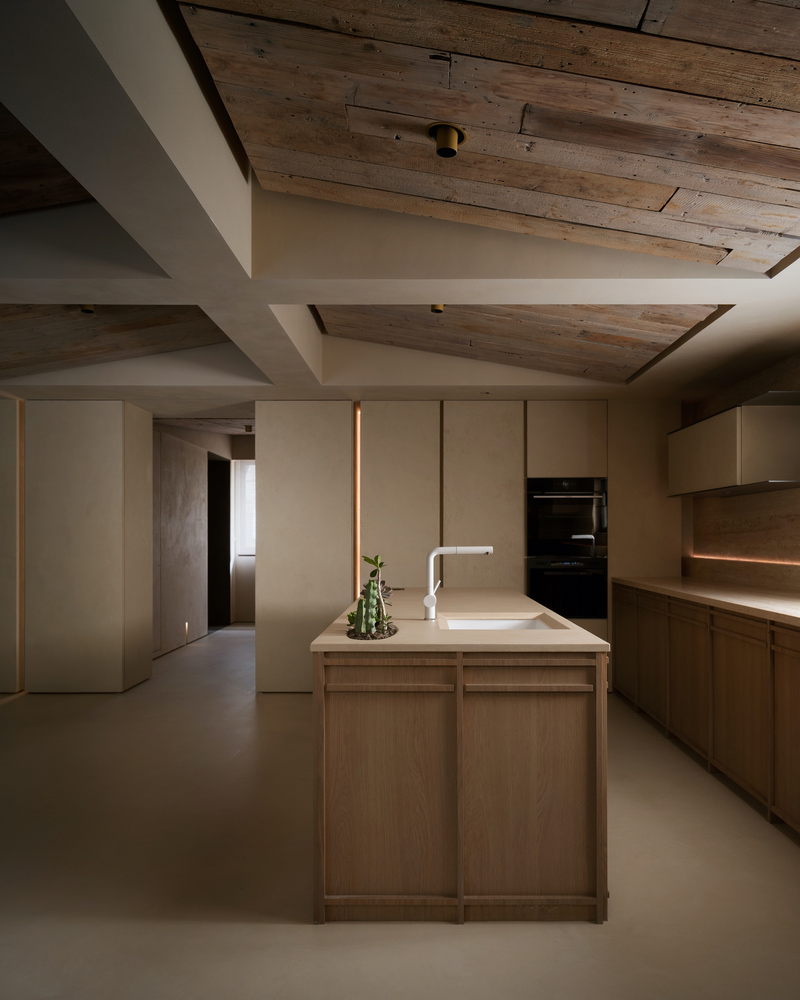
Choose the wall with the window or sink and remove only the uppers on that side. In their place, install one continuous floating oak shelf, or two staggered shelves at roughly 18" and 36" above the counter. Keep the opposite run untouched.
The storage math is honest. You lose 12–18 linear feet of shelf and gain a 6–8 ft airspace that reads almost two feet wider. The lost storage moves to a taller pantry on the opposite wall, a 24" rolling base cart, or a full-height upper run that skips the standard 30" boxes.
The aesthetic payoff is bigger than the storage trade. Natural light bounces off the newly exposed wall, the room gains depth, and a single open shelf becomes the only "decorating" needed. The 2026 trend coverage on HGTV calls this the highest-impact-per-dollar move in narrow kitchens.
Cost: $400–$1,200 to remove cabinets, patch drywall, and install the shelf — the cheapest move in the remodel.
Lighting: the $1,200 layer that does 80% of the visual lift
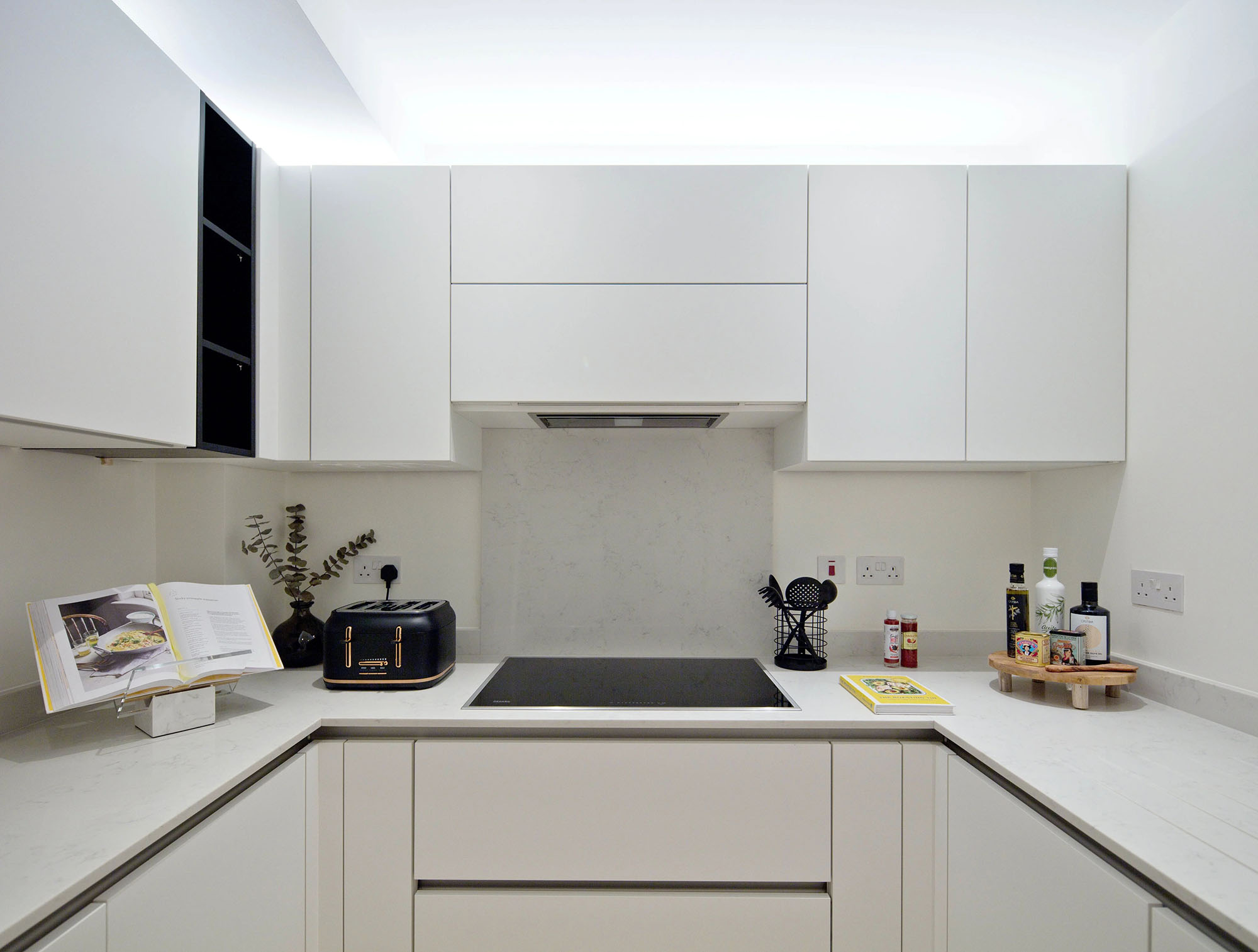
The 2026 galley lighting trifecta is overhead recessed + under-cabinet tape + one warm fixture. For a 12 ft galley: four 4" recessed cans on a dimmer at 2700K–3000K, a continuous 5W/ft under-cabinet LED tape at 2700K (hidden behind a fascia), and one pendant or sconce at the sink wall.
Color temperature is non-negotiable. 2700K reads warm and skin-friendly; 3000K is the upper limit for warm-white cabinets; never use 4000K — it reads "office break room." Dim the overheads to ~60% for evening cooking and the kitchen flips from work surface to entertaining space.
| Bad | Good (2026) |
|---|---|
| Bare fluorescent strip | Continuous 2700K LED tape behind a fascia |
| Cool-white 4000K cans | Warm-dimmable 2700K LEDs on a dimmer |
| Pendant centered over hood | Pendant moved 18" toward the sink wall |
The renter version costs under $300: plug-in puck lights with adhesive strips, warm-LED bulbs in existing fixtures, and one battery-powered motion sensor in the toe-kick — no electrical panel access required.
Cabinet color and backsplash: choices that age past 2030
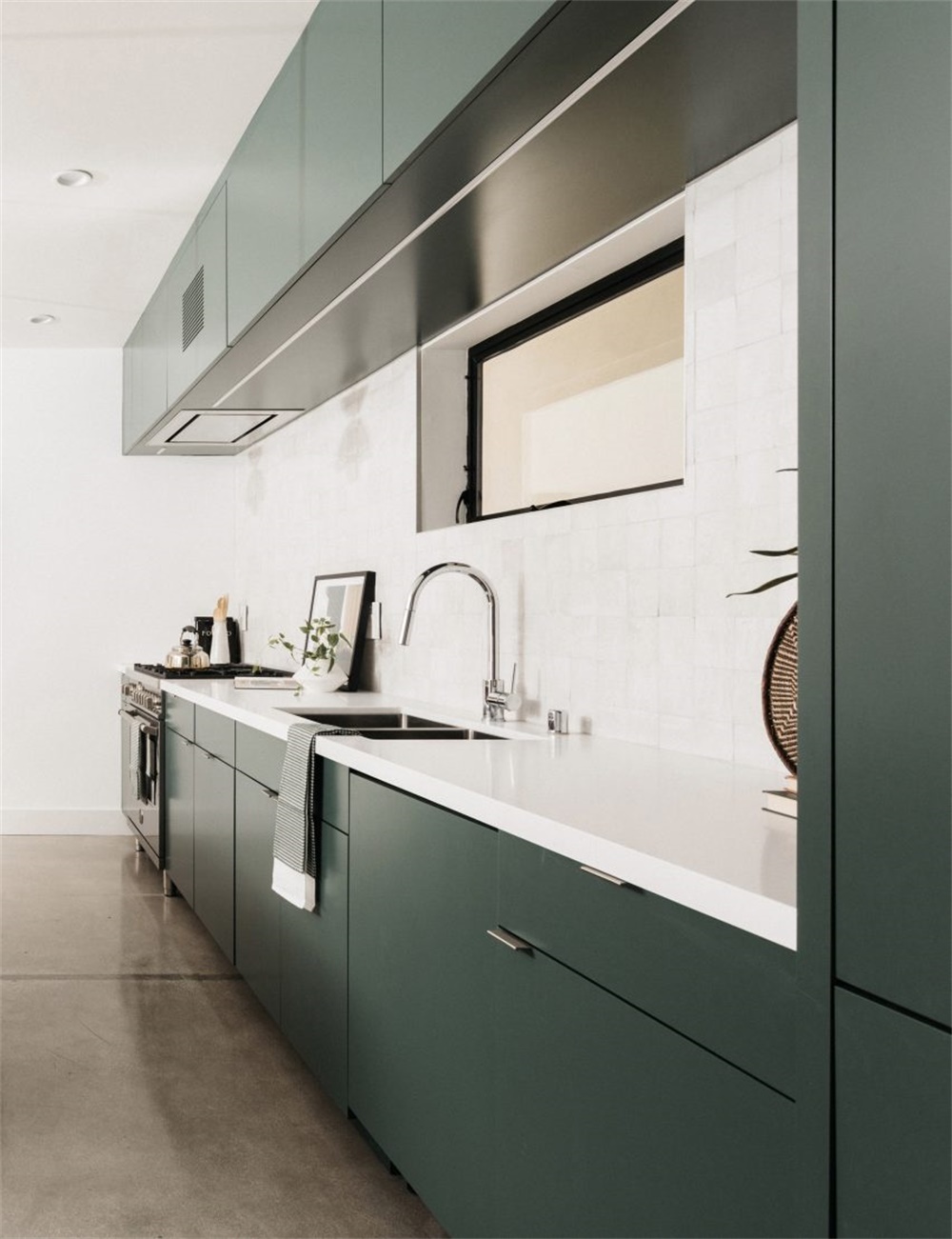
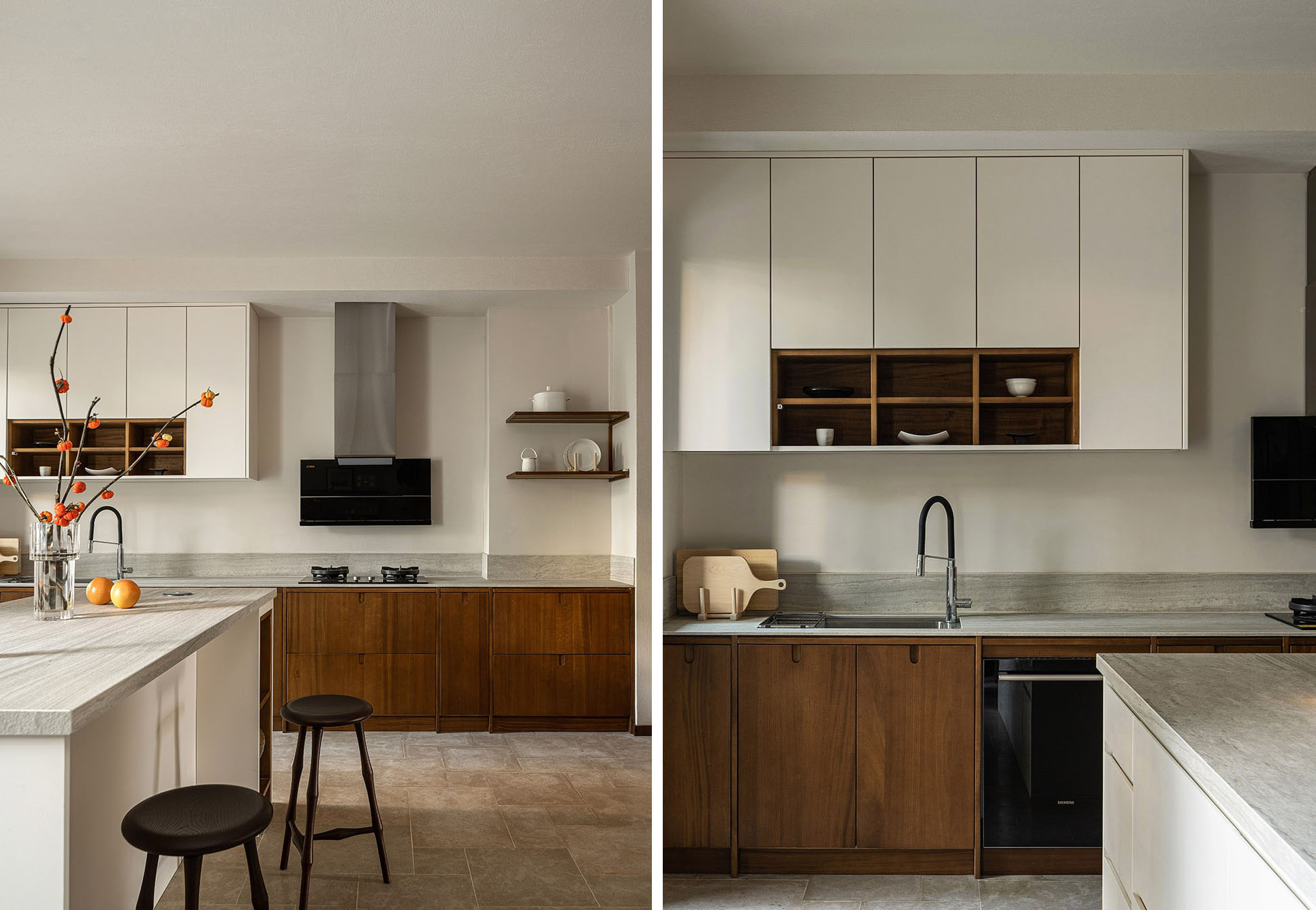
The 2026 designer pick is two-tone: navy or forest-green base, warm-white uppers, brushed brass or matte black hardware. The combination shows up repeatedly in HGTV and Architectural Digest kitchen coverage through spring 2026 — the saturated lower anchors the room, the warm uppers keep it light, and it photographs well resale-side.
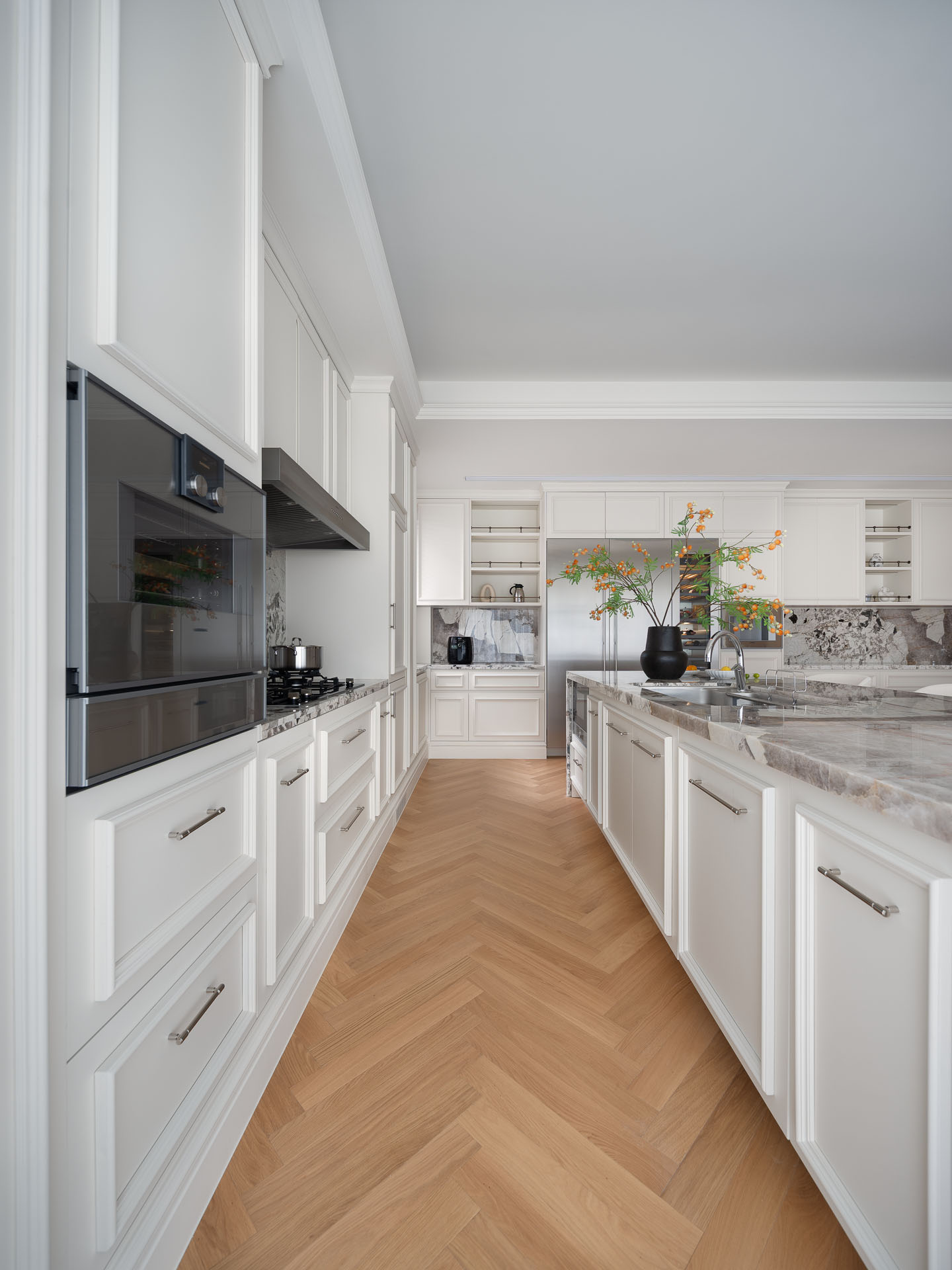
All-warm-white is the safer ageing play. Pick a warm white with a slight yellow or red undertone — never cool gray-white that reads blue under LED. Paired with quartz or soapstone counters and brass hardware, warm white never reads "builder grade" — the pick for households deferring the next color decision to 2032.
| Tier | Backsplash pick | Cost (10–12 ft) |
|---|---|---|
| Renter | Peel-and-stick zellige look | $120 |
| Mid-budget owner | Glossy white subway with dark grout | $380 + install |
| Longevity-first owner | Fluted glass or true zellige | $900–$1,800 + install |
What to avoid: jet-black-and-white checkerboard floors, mosaic penny tile, blue-gray cabinet paint, glossy chrome hardware, and "marble look" laminate. Designer press through 2026 flags each as already dated.
Preview your remodel before the contractor shows up: a 10-minute AI test
The 2026 Houzz kitchen survey names cabinet color as the most common post-install regret. A galley deposit runs $1,500–$3,000, and repainting or refacing after install adds $2K–$3K. Ten minutes of previewing prevents the most expensive remodel mistake on the list.
The workflow is simple. Photograph your galley from both ends in daylight (windows open, lights off). Upload to Feel Design Explore. Generate three cabinet-color variants — warm white, navy two-tone, forest-green two-tone — and two backsplashes against each. Bring them to the contractor on day one.
Prompts that work in 2026: "galley kitchen, refaced warm-white shaker cabinets, brushed brass, white quartz drop-in counter, 2700K under-cabinet LED" and "galley kitchen, navy base cabinets, warm-white uppers, fluted glass backsplash, oak floating shelf." AI handles cabinet color, hardware finish, and backsplash pattern. Verify counter texture, true gloss, and drawer-pull comfort in person.
This is how you test cabinet colors before refacing without a single physical sample order — the only step in this guide that costs nothing.
FAQ
How much does a small galley kitchen remodel cost in 2026?
A small-budget galley remodel lands between $8,000 and $18,000 for an 8–14 ft layout in 2026, per Block Renovation, NKBA, and Houzz survey data. That bracket covers refacing cabinets, quartz drop-in counters, new hardware, a 2700K lighting refresh, and a backsplash. Moving plumbing, new appliances, or electrical rewiring each add $2K–$6K.
Is refacing or replacing galley kitchen cabinets a better idea on a small budget?
Refacing wins for almost every $8K–$18K galley. New doors, drawer fronts, and veneer over existing plywood boxes runs $4K–$9K and delivers around 80% of the visual lift of full replacement, which costs $9K–$22K. The exception: if your boxes are MDF flake, swollen, or laid out wrong, replace instead. The rule of thumb — knock on a box; if it sounds solid, reface.
Should I remove the upper cabinets in my galley kitchen?
Remove uppers from one wall only — typically the sink or window wall — and replace with a continuous oak floating shelf or two staggered shelves. The galley reads almost two feet wider, natural light bounces farther, and you reclaim a styled surface. Keep the opposite run for storage. Total cost runs $400–$1,200 with DIY demolition.
What lighting works best for a small galley kitchen in 2026?
Layer three light sources at 2700K–3000K: four recessed 4" cans on a dimmer for general light, a continuous under-cabinet LED tape (5W/ft) for counter work, and one warm pendant or sconce on the sink wall for atmosphere. Avoid 4000K and any cool-white bulbs. Budget $800–$1,200 for the full set installed; under $300 for plug-in renter versions that leave no permanent install.
How do I test cabinet colors before refacing my kitchen?
Photograph your galley from both ends in daylight, then upload the photo to an AI design preview tool like Feel Design Explore and generate three cabinet-color variants — typically warm white, navy two-tone, and forest-green two-tone. Verify how each reads in your real light against your floors and counters before committing to a sample order or contractor deposit. Save the variants you like and share them with the contractor on day one.
Conclusion
A $15K galley remodel in 2026 is one of the highest-leverage moves in home design — reface, open one wall, layer 2700K lighting, pick warm-white or two-tone, hardware and backsplash last. Before any deposit, preview three cabinet colors and two backsplashes on a photo of your kitchen at Feel Design Explore. Ten minutes prevents the most expensive remodel regret on the 2026 Houzz survey.
References
- Block Renovation — 2026 kitchen remodel pricing benchmarks.
- National Kitchen & Bath Association (NKBA) — 2026 kitchen design trends and survey data.
- Houzz — 2026 kitchen survey on post-install regret and designer practice.
- Architectural Digest — 2026 kitchen coverage on two-tone cabinets.
- HGTV — 2026 narrow-kitchen trend reporting.